The Same Scene. Seven Stories.
Here's something every filmmaker knows but rarely says out loud: the script isn't the whole story. The camera is.
You can hand two directors the exact same scene — same characters, same dialogue, same location — and they'll make two completely different films. Not because they changed anything. Because of where they put the camera.
That's composition. And it's the most underestimated tool in your creative arsenal.
Module 4 of Mastering the Camera makes this concrete with a single scenario. A man pulls his brand new Tesla into a desert gas station. He gets out, walks to the pump, picks up the nozzle, and starts looking for somewhere to put it. There is no gas tank. It's an electric car. The attendant watches him figure this out in real time.
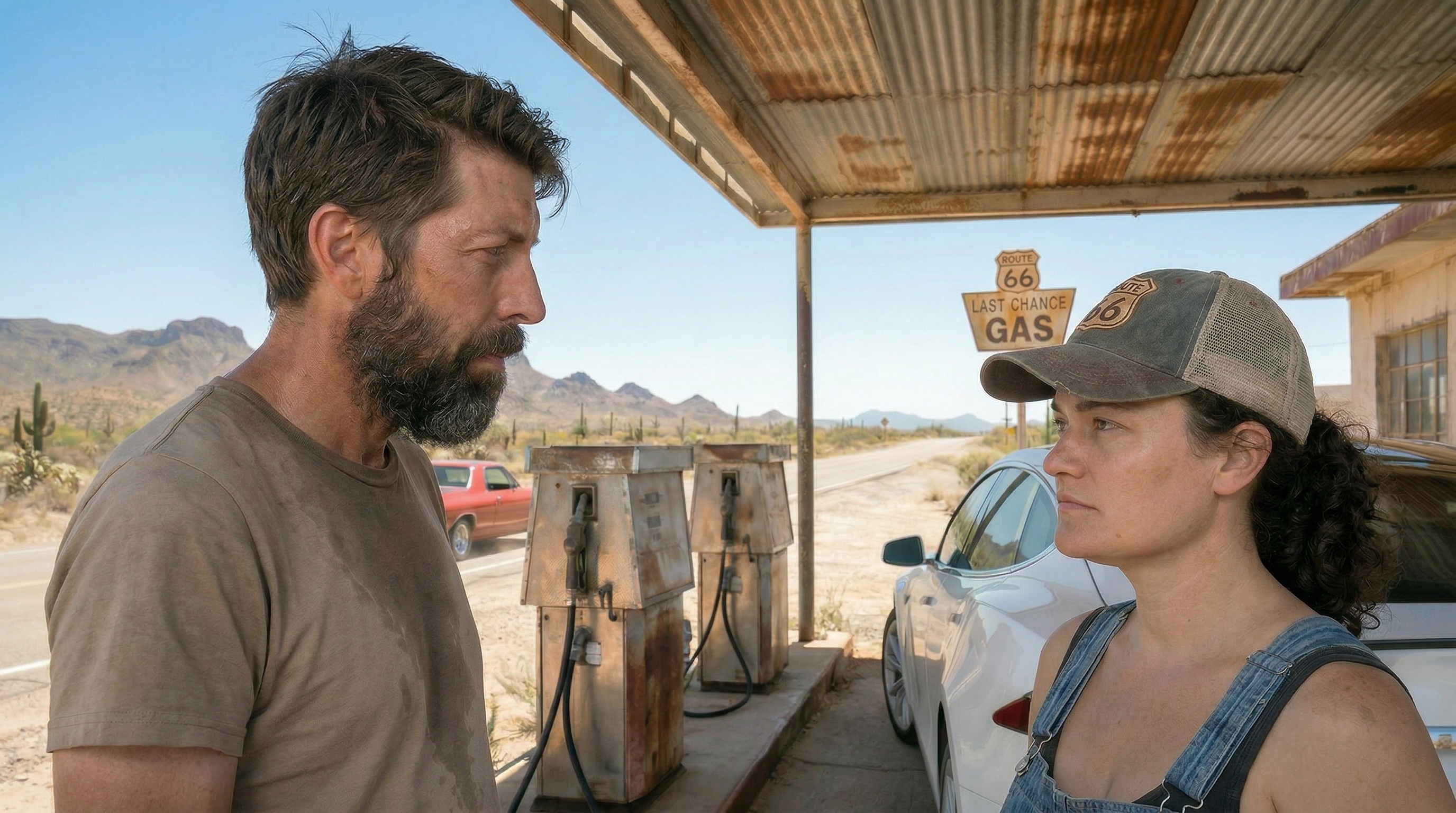
Shot wide, it's a comedy. Shot close, it becomes something more uncomfortable. Shot low, the same beat carries real weight.
Nothing changed but the frame.
What the module covers
The module works through seven distinct compositions of the same setup. Same characters, same action, same staging. Each one shifts what the audience feels and where their attention lands. A few worth knowing:
The Establishing Wide. Everything is visible, nothing is emphasised. The gas station, the road, the car, the people. It's the breath before the story starts, orienting your audience before you ask them to feel anything.
The Two-Shot. Both characters, waist up, sharing the frame. The dynamic between them becomes the subject. You're not watching one person, you're watching a relationship.
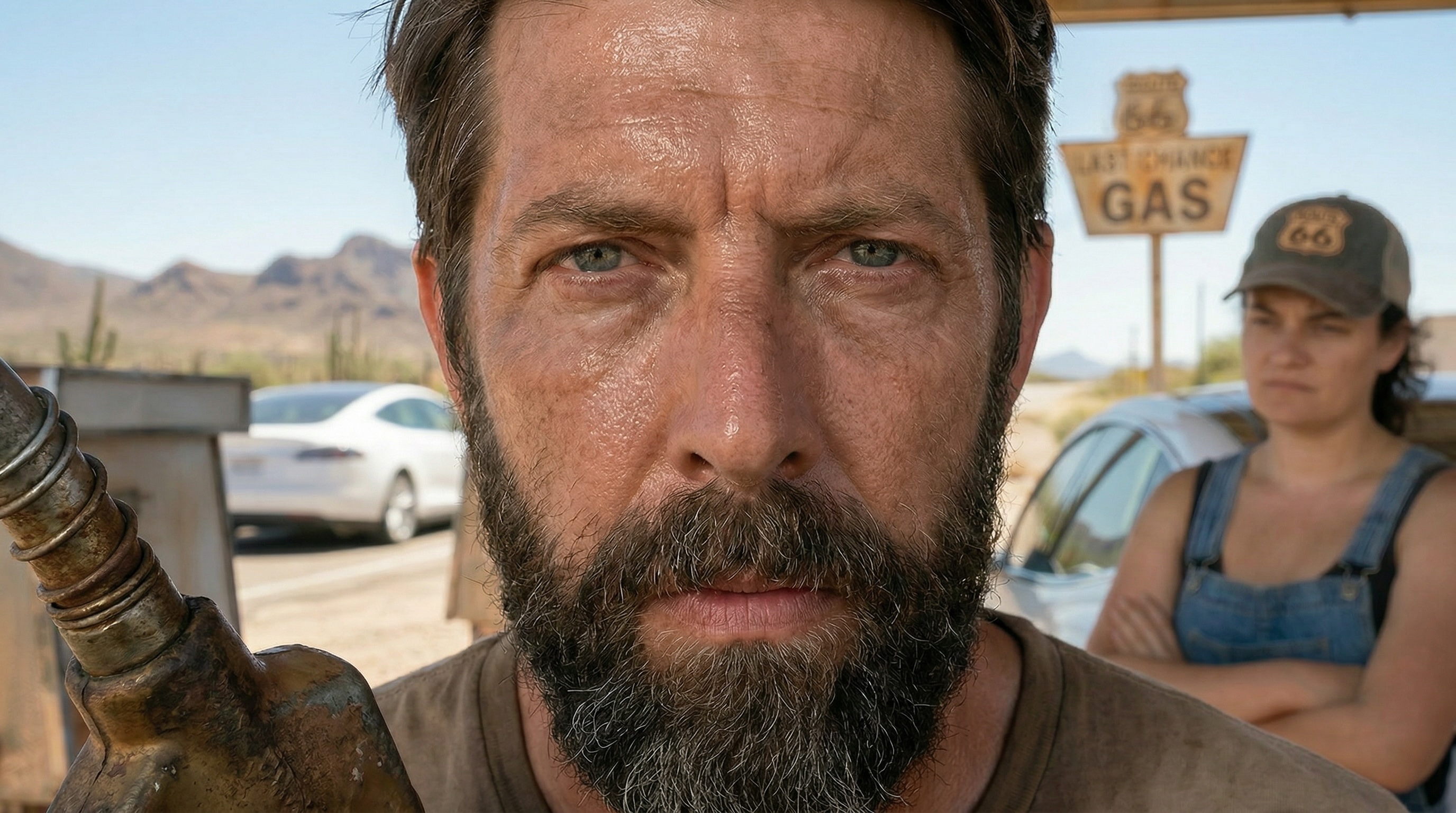
The Close-Up. Everything else disappears. Just a face and whatever is happening behind the eyes. It's an intimate shot that earns its intimacy. Use it too early and you've spent it for nothing.
The Insert. Not a person but an object. In this scene, a fuel nozzle held against a car with no gas tank. One image that contains the entire joke without a single word of dialogue.
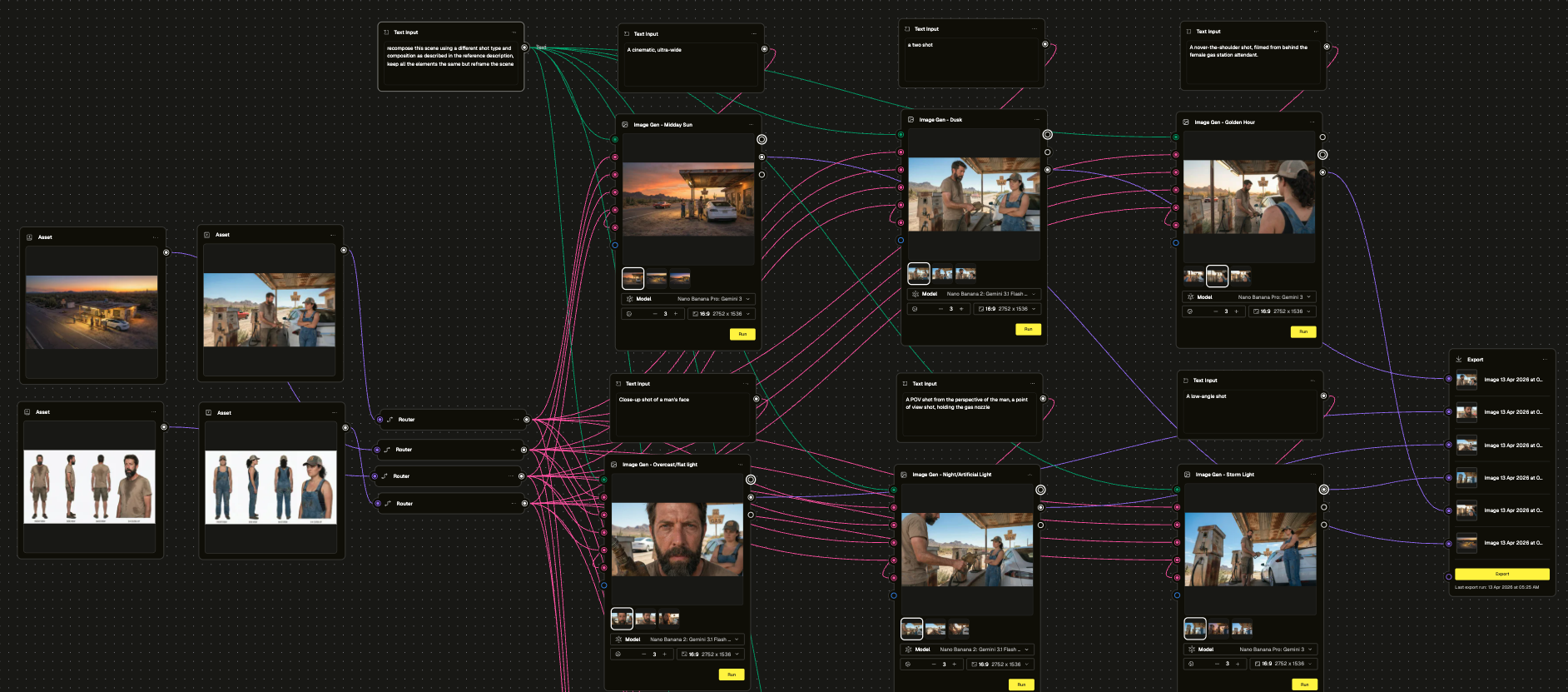
Each shot is generated from the same core prompt, with one short description swapped out to redirect the composition. A two shot. A low angle. Close-up shot of a man's face. That's the whole instruction.
Most people prompting AI image generation think about what's in the shot. This module is about where the shot is. It's a small shift in thinking that changes everything.
Now, go make something worth looking at.
USE THE WORKFLOW YOURSELF
Just copy and paste this Workflow ID into your workspace:
{"clientUuid":"dc99897e","clientName":"Pencil Creative Team","ids":["66501f3b-c47c-43ed-931e-2bc4155eb8df"],"contentType":"WORKFLOW"}
⬇️⬇️⬇️
EXPLORE MODULE 4 - COMPOSITION
DOWNLOADABLE STARTING ASSETS