On a real production, testing lighting costs you a full day and a gaffer's day rate before a single frame exists that you can actually use. Most teams skip the test. They go with their gut, brief from memory, and hope the light gods are feeling generous on the day.
Sometimes they guess right.
Lighting is one of those things that looks like a finishing decision but is actually a foundational one. The same scene in golden hour and the same scene under storm light are not the same scene. They're telling different stories. Carrying different emotions. Asking different things of the viewer.
The problem has always been that you can't really know which story you want to tell until you see it. And seeing it, historically, has been expensive.
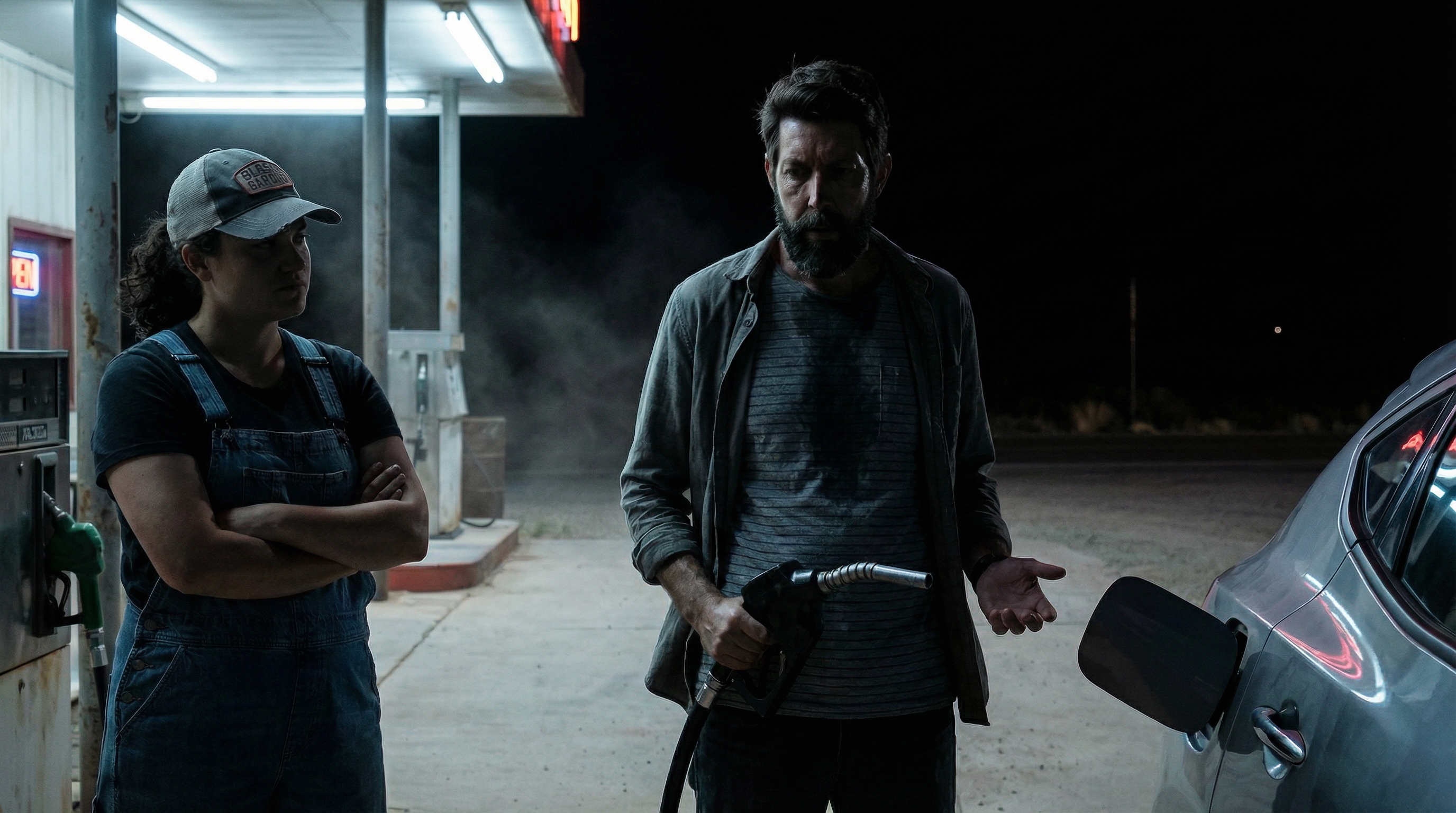
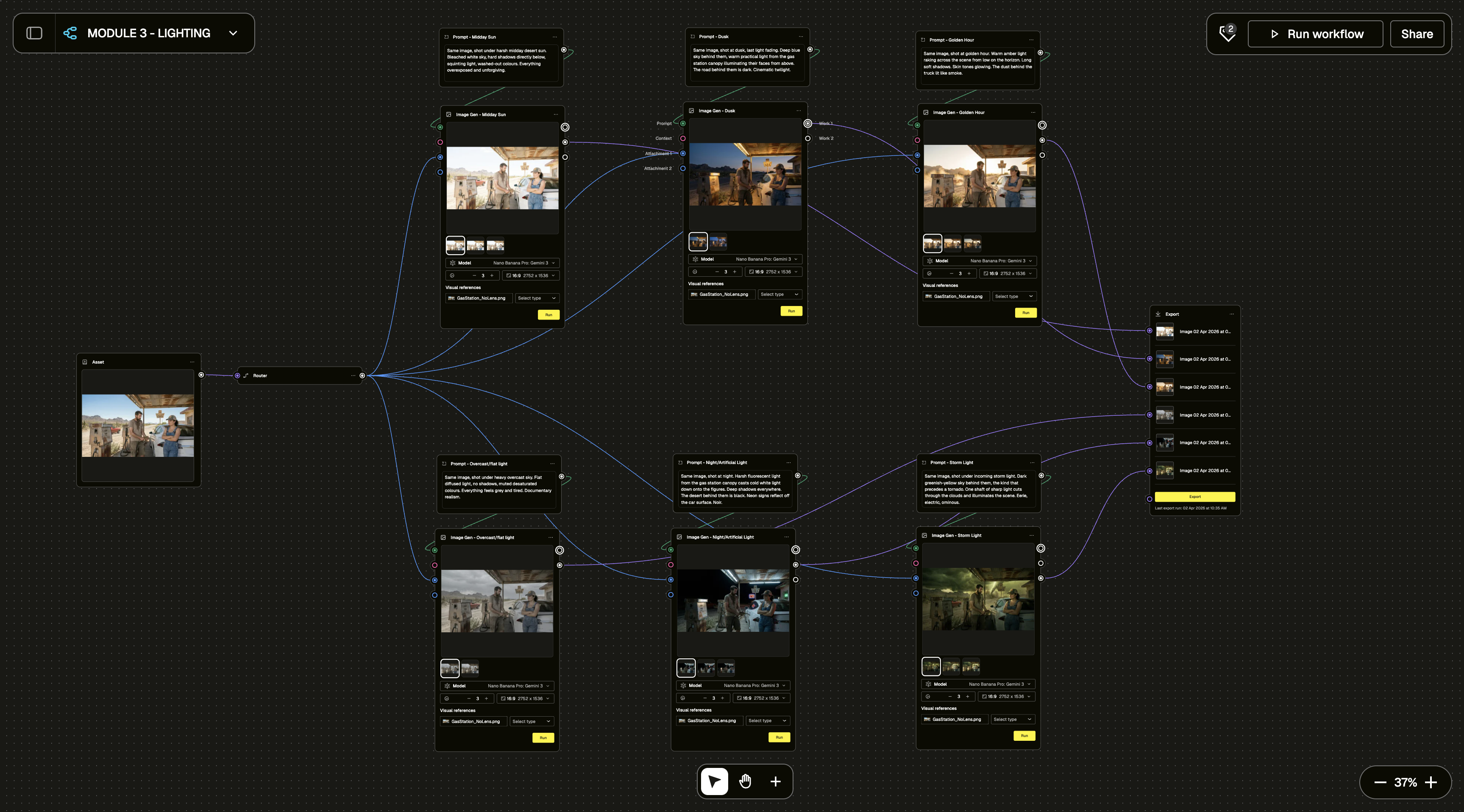
In this module, we built a single workflow around one base image — a late-night gas station, two people, some tension — and ran it through six distinct lighting conditions in parallel. Same scene. Same composition. Same characters. Six completely different treatments.
Midday Sun. Dusk. Golden Hour. Overcast. Night. Storm Light.
One workflow run. Six images back. One decision to make.
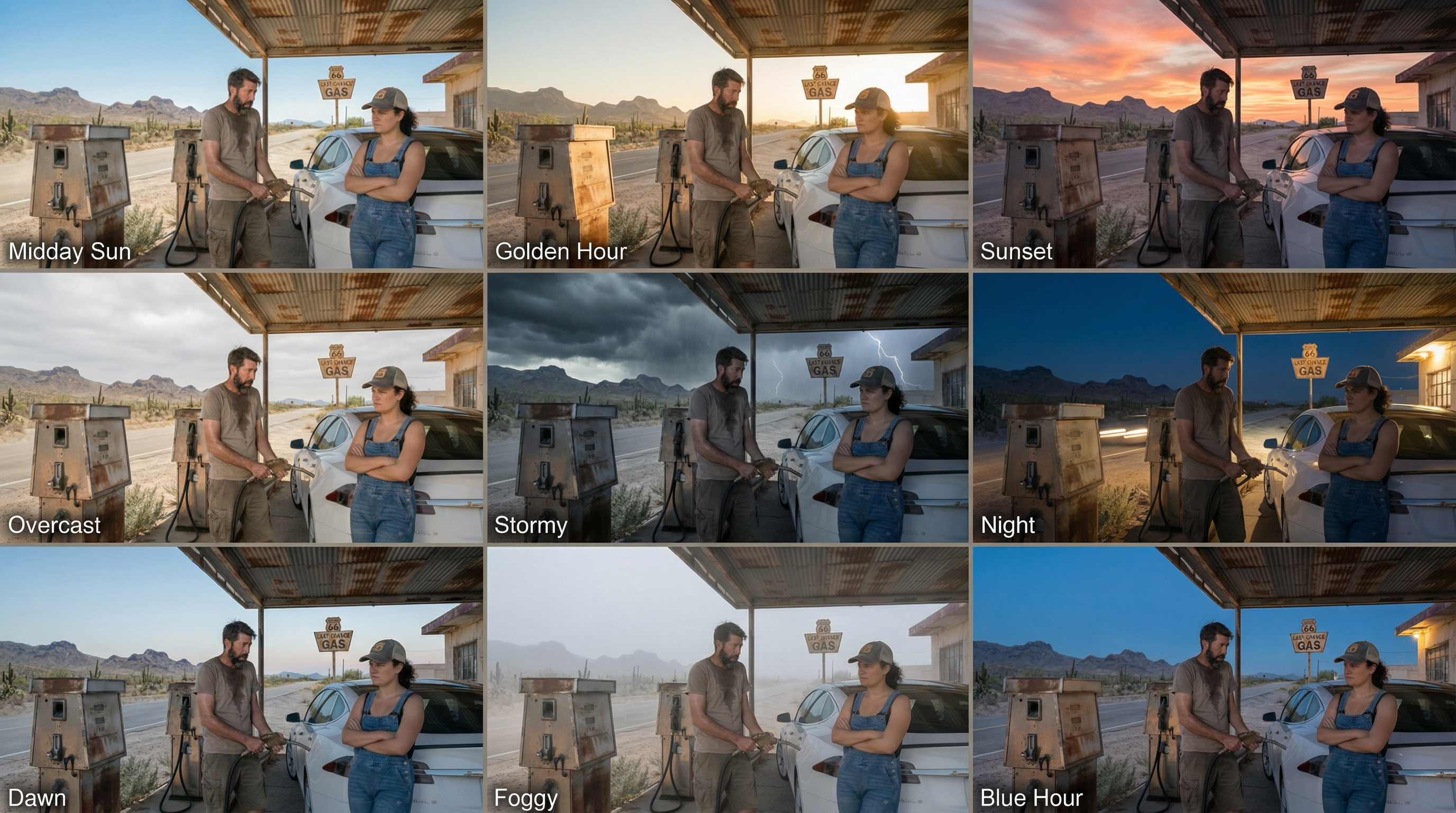
The difference between them isn't subtle. Golden hour gives you warmth, aspiration, the feeling that something is about to change. Overcast gives you documentary realism — flat, honest, unglamorous. Night flips the whole thing: cold fluorescent top light, deep shadows, nothing beyond the canopy. It's the same two people and it reads completely differently.
That's what lighting does. It doesn't just illuminate a scene. It tells you how to feel about it.
We also built a second workflow in this module, and it's the one I think most people will get the most out of.
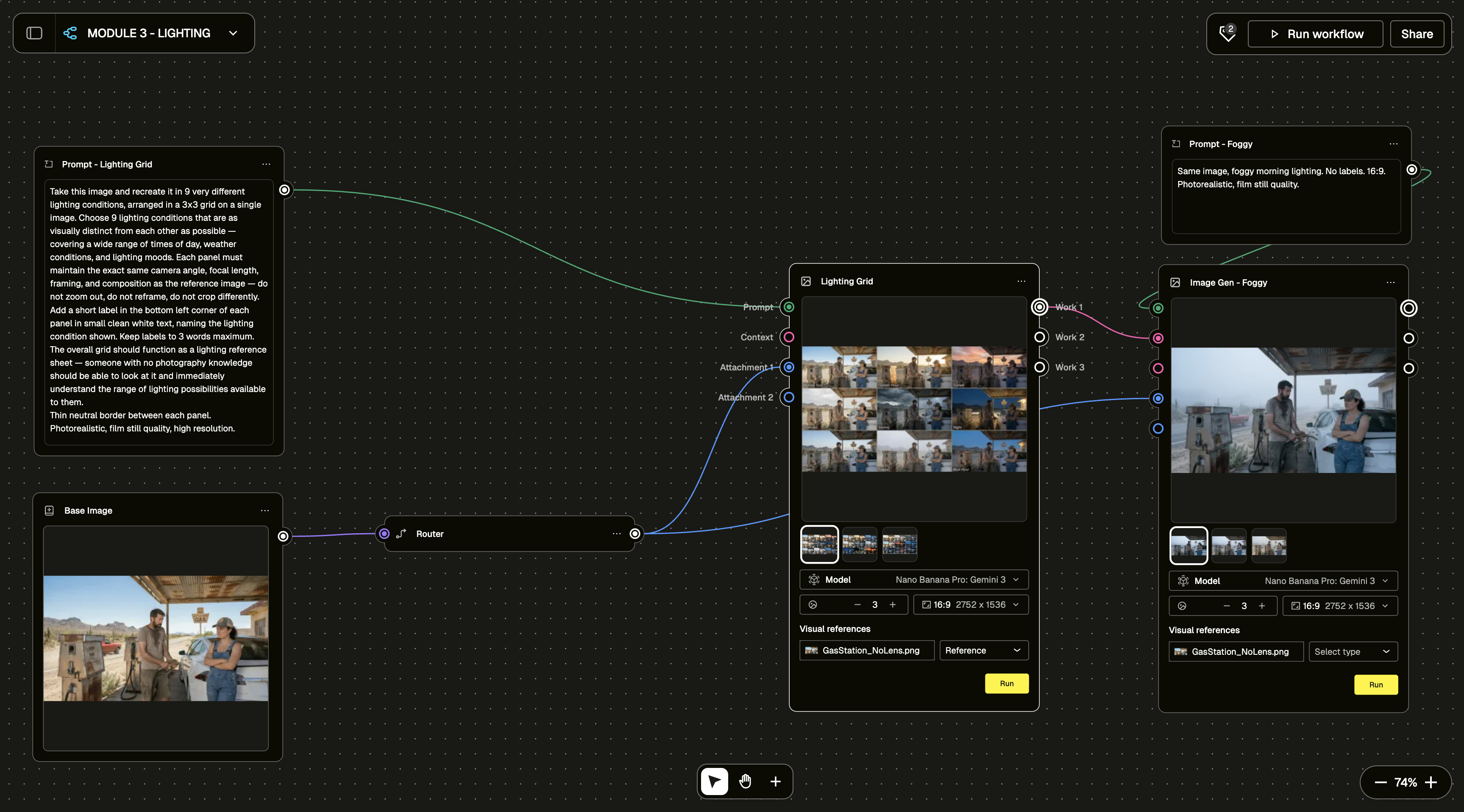
We call it the discovery workflow. And the idea is simple: if you don't have a strong lighting reference in your head, stop trying to describe what you want and let the model show you what's possible first.
Step one: one prompt asks the model to render your scene across nine maximally different lighting conditions, arranged in a 3x3 grid on a single image. It labels each one. You get a full lighting menu generated from your own image in a single run.
Step two: you pick the one that catches your eye. You name it. One short prompt. Full-resolution render.
Two prompts. One informed decision. No guesswork.
The thing I love about this workflow is that it flips the creative process on its head. Most of us approach lighting by trying to describe what we already think we want. But you can't describe a feeling you haven't seen yet. This lets you see first and decide second, which is honestly how the best creative decisions get made anyway.
Go through the module. Run the discovery workflow on something you're working on.
You don't need to know the name of the light before you start. You just need to know it when you see it.