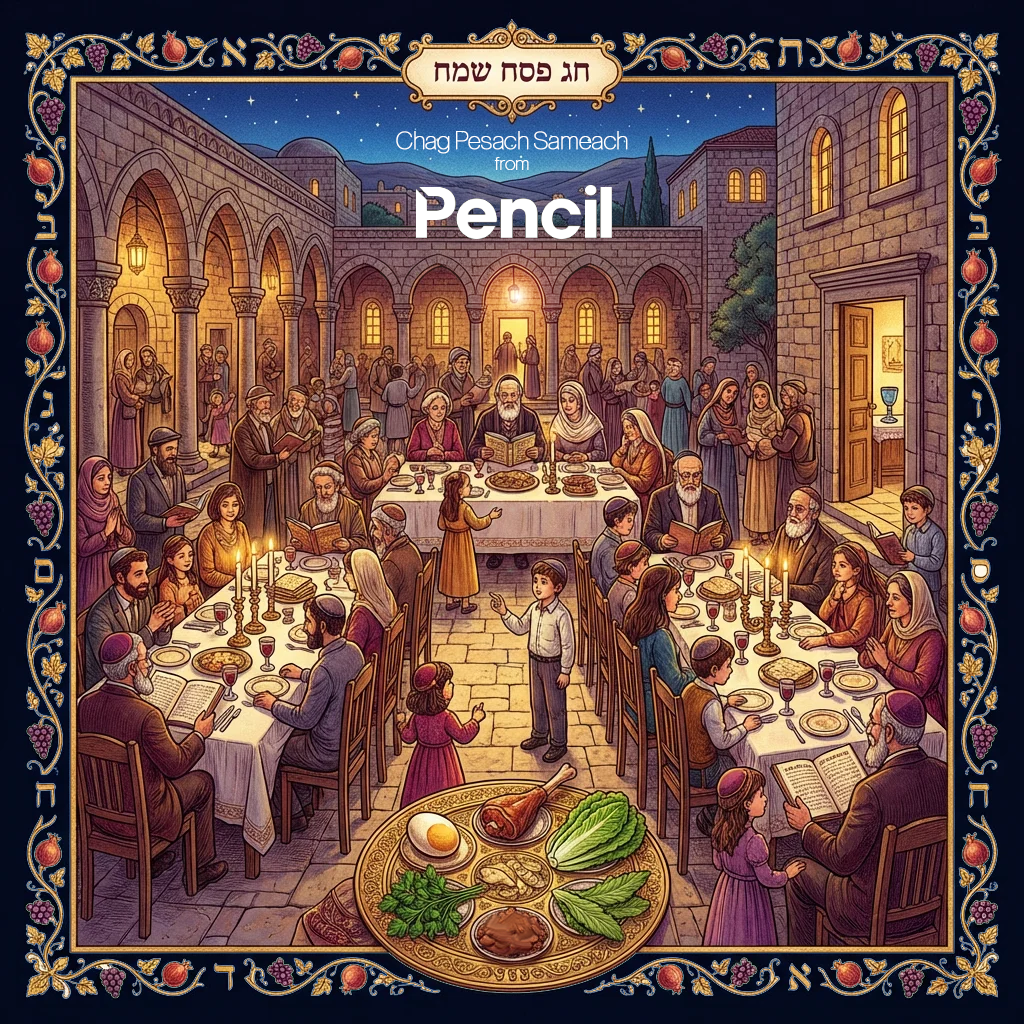
There’s a moment near the beginning of every Passover Seder when the youngest person at the table asks four questions. The first question translates roughly as: "Why is this night different from all other nights?" It’s a question directed at no one in particular and everyone at once. And it sets the tone for the entire evening.
Passover (Pesach in Hebrew) relives the Exodus - the liberation of the Israelites from slavery in Egypt. This year it begins at sundown on Wednesday 1 April and runs through to Thursday 9 April, with the Seder meals held on one (or both!) of the first two evenings.
The Haggadah - a sacred ancient text that guides the Seder - encapsulates the essence of what it’s all about: each person at the table should regard themselves as though they personally had left Egypt. This is one of the ways that ancient myths and folktales are woven into our lives. Culture is reinscribed and kept alive by living it.
The table itself tells the story. Matzah (unleavened bread) recalls the haste of departure: no time for dough to rise! Bitter herbs evoke the harshness of slavery. Charoset - a sweet paste of fruit, nuts, and wine - represents the mortar used by enslaved labourers. A roasted shankbone. An egg. Salt water for tears. Every flavour is part of a living tradition of Jewish storytelling, told through food.
Passover is a distinctly inclusive, participatory occasion. The Seder is structured as a conversation across generations. Children are central to it. The four questions they ask form the spiritual shape and character of the occasion. The tradition carries an implicit promise: that each generation will retell the story, actively, so the next one feels it too. That we should never stop being grateful for freedom, never stop being mindful of our privileges, and never take any of it for granted. It’s a reminder to live with kindness, empathy, humility, and self-respect, out of gratitude for the blessing of a life lived in freedom.
For colleagues who observe, there are a few practical things worth knowing. Passover involves some dietary changes: for seven or eight days, all leavened foods (bread, pasta, cereal, -even the delicious baked goods that are a mainstay of so many Jewish family food cultures) are set aside entirely. At work, awareness of this around team lunches, shared catering, or meeting schedules is a small gesture that signals genuine consideration.
In this year's calendar Passover, Easter, and Eid al-Fitr all converge around the end of March and early April; three Abrahamic traditions, each carrying its own powerful narrative of deliverance. The resonances of these occasions are real and vibrant, and still very much part of life in 2026.
Chag Pesach Sameach, from all of us here at Pencil!